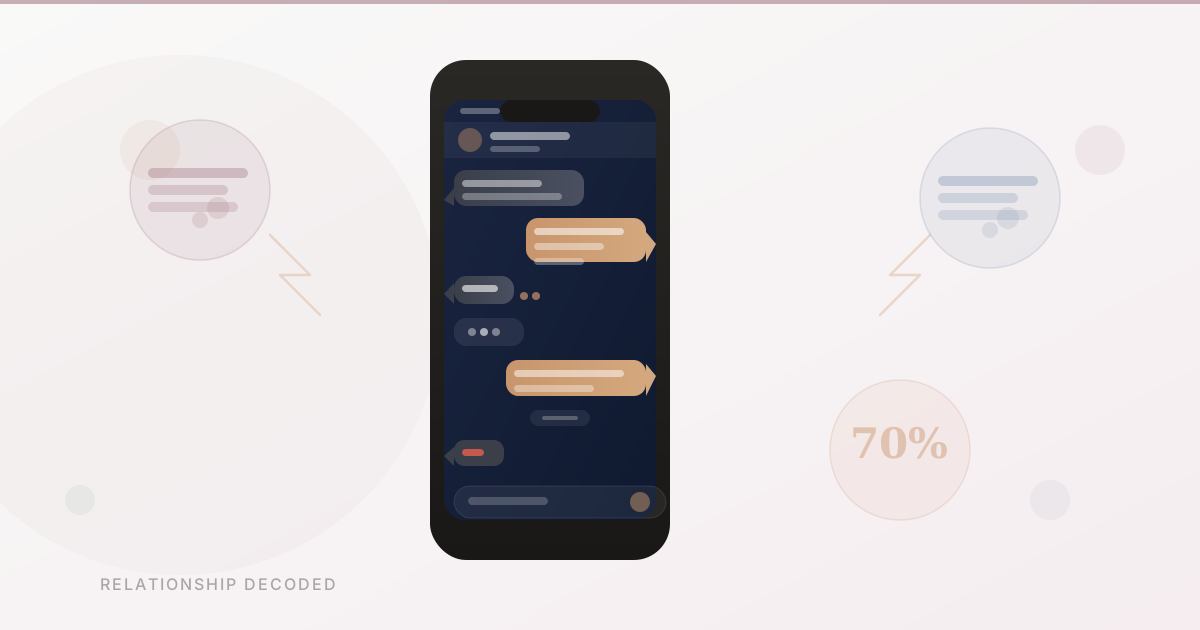
The statistic isn't precisely 70% — it comes from a survey of relationship therapists reporting that texting miscommunication is among the most common triggers for couple conflicts they see. But the number could be higher. Most text-triggered fights don't make it to a therapist's office at all.
What's actually happening when a message causes a fight?
The tone problem
When you speak to someone face-to-face, roughly 93% of what you communicate comes through tone of voice and body language. A text message transmits almost none of that. What's left is the literal words, with no delivery.
This creates a vacuum. And when there's a vacuum, our brains fill it in automatically — usually with whatever emotional state we're already in. If you're anxious, a neutral "ok" reads as cold. If you're feeling guilty, "we need to talk" reads as catastrophic.
The message hasn't changed. Your internal state did the interpretation.
Context collapse
A text message has no context outside of itself. You don't know if the person was rushing to a meeting when they replied, if they're in a loud environment, or if they spent thirty seconds agonizing over word choice. You get the output with no visibility into the process.
This is especially dangerous when someone shortens their response. A long reply that gets shortened to "haha ok" because they're distracted reads, to the recipient, as dismissal. The intention was efficiency. The effect was withdrawal.
The delay trap
In person, response latency is immediate. In text, someone might not reply for two hours because they got busy — but the read receipt is there, sitting. Every minute of delay becomes information that wasn't intended to be sent.
The anxiously attached partner reads four hours of silence as evidence of something. The avoidantly attached partner thinks they're just giving space. Both are responding to different realities that the text created, not the actual relationship.
Why AI analysis helps here
The reason tools like SubtextAI can add value in these situations is simple: a second read disrupts the first one.
When you paste a message that's upsetting you, the analysis forces a pause between the stimulus (receiving the message) and the response (whatever you were about to do with that emotion). It offers a different frame — not the one your current emotional state generated.
That doesn't mean the AI is always right. Sometimes your gut read is correct. But having a second interpretation — especially one that accounts for ambiguity — reduces the chance that you're reacting to a story you invented rather than something that actually happened.
Some practical things that help
Assume neutral tone by default. When a message could be read as cold or warm, assume warm. You'll be right more often than you'll be wrong, and you'll have fewer conversations that start from a false premise.
Move it to voice for anything that matters. If a text conversation is starting to get tense, end it. The medium is the problem, and the solution is switching mediums.
Name the tone you intend. "This is a genuine question, not a dig:" before a message that could read either way. It takes two seconds and prevents ten-minute fights.
Don't interpret delays as messages. A four-hour response gap is usually a four-hour response gap. Check that assumption before you decide what it means.
Most text fights aren't fights about the text. They're about the story the recipient built around it. Build a better story, or get better information — either one gets you somewhere more productive.