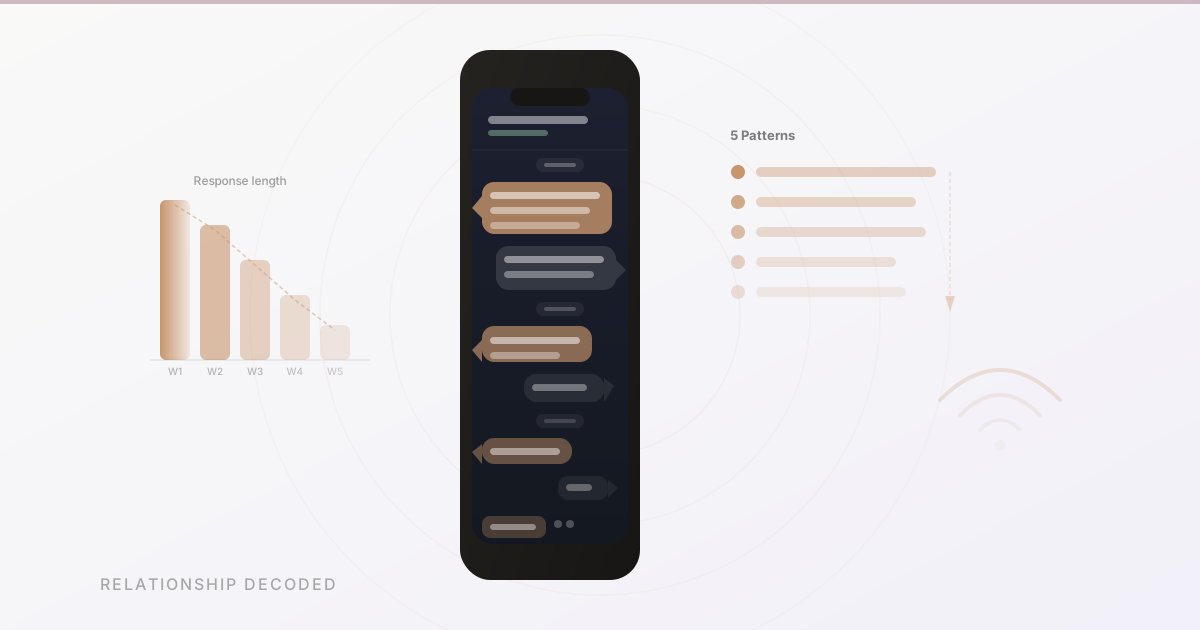
People rarely end romantic interest in a single moment. It tends to fade gradually, and often the earliest signals show up in how — and how much — someone texts.
This isn't about stalking someone's response patterns or building a case against them. It's about having enough information to see clearly so you can make good decisions about how to proceed.
1. Replies have gotten shorter, with less content
Early in most connections, people send messages that leave threads to pull on — questions, observations, things that invite a response. As interest decreases, the texture of messages often changes first. They still reply, but the replies are more transactional. "Haha yeah" where there used to be a story. "Sounds good" where there used to be a question back.
The key is the trend, not any single message. One-word replies on a busy day are noise. A consistent shift to minimal engagement over weeks is a signal.
2. They stopped asking questions
Interest in someone tends to manifest as curiosity. People who want to know more about you ask about you — not constantly, not formulaically, but they ask. When that stops, and the conversation becomes a series of responses without questions back, the dynamic has changed.
Note: some people are just not natural question-askers. If this is a new absence where questions used to exist, it's more meaningful than if it's a style baseline.
3. Response times have slowed and become inconsistent
This one gets misread a lot. Someone who consistently responds slowly isn't necessarily losing interest — they might just be slow. The pattern to notice is a change from how they used to respond. If someone who previously replied quickly has shifted to hours-later responses, and it's consistent, that change carries information.
Also relevant: the consistency of the slowness. A person who's busy will have spikes in response time but return to a baseline. A person who's emotionally withdrawing often doesn't.
4. Conversations have stopped having a destination
When both people are interested, conversations tend to have a shape — they go somewhere, reference something that happened, build toward plans. When interest is waning, conversations often become more circular or flatline: you ask something, they answer, silence. No forward momentum.
The absence of "we should do X sometime" or references to future plans is worth noting. People making room for someone in their future mention that future.
5. The initiative has become one-sided
Pay attention to who starts the conversations. In a healthy reciprocal interest, both people reach out. When you notice you're consistently the one opening threads and they're responding but not initiating, that asymmetry is a pattern worth taking seriously.
Again: a single stretch doesn't define a pattern. A week where they're stressed or overwhelmed is different from a consistent month. The question is whether this is temporary or structural.
What to do with this
Don't make a decision based on text patterns alone. Text is an impoverished medium for reading human connection, and there are a hundred explanations for changed behavior that have nothing to do with you.
But if multiple patterns overlap and persist over time, that's worth addressing directly — not as an accusation, but as an honest conversation: "I've noticed we're talking less lately, and I wanted to check in." The response to that, and the conversation it opens or closes, will tell you far more than any text pattern could.
SubtextAI can help you get a second read on specific messages, but the bigger picture has to come from the whole pattern of the relationship — not any single data point.